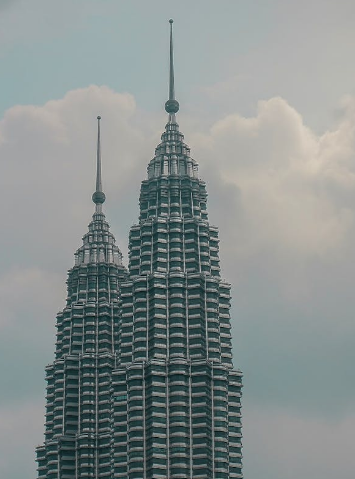
Understanding the Twin Towers: Malaysia's Celebrated Architectural Landmark
Uncover the full narrative of the twin towers in Kuala Lumpur - from initial planning through final construction. Explore their architectural importance, engineering accomplishments, historical relevance, and why these 451.9-meter structures continue to be among the world's most famous landmarks in Kuala Lumpur, Malaysia.
The Twin Towers: Representing Contemporary Malaysia
The twin towers in Kuala Lumpur, formally called Menara Berkembar Petronas in Malay, stand among the most celebrated architectural accomplishments of the 20th century. Finished in 1998, these impressive twin skyscrapers in Kuala Lumpur, Malaysia, embody an ideal combination of Islamic design traditions, advanced engineering, and modern architectural language.
Historical Context and Meaning
The twin towers were initiated by Petronas, Malaysia's national oil corporation, as a component of the Kuala Lumpur City Centre (KLCC) development initiative. The towers were conceived to represent Malaysia's swift economic expansion and technological advancement in the late 20th century, while also respecting the nation's Islamic cultural legacy.
Building commenced in 1992, with foundation engineering representing one of the most demanding technical challenges in contemporary skyscraper development. The initiative needed creative approaches for Malaysia's distinctive geological environment, including constructing on previous racecourse property with difficult ground conditions.
Design Philosophy: Cesar Pelli's Architectural Achievement
Argentine-American architect Cesar Pelli, from Cesar Pelli & Associates, secured the international design competition for the towers. Pelli's approach masterfully combined Islamic geometric motifs with modern high-rise design, producing structures that are both uniquely Malaysian and globally respected.
The towers' unique eight-pointed star floor layout (called Rub el Hizb in Islamic geometry) generates a sequence of circular and semi-circular sections that offer outstanding vistas while minimizing wind impact. This geometric pattern, merged with the towers' polished stainless steel and glass exterior, produces a gleaming, crystal-like look that varies with daylight conditions.
Technical Accomplishments and World Records
Upon completion, the twin towers claimed the distinction of being the world's tallest structures, reaching 451.9 meters (1,483 feet) from base to spire top. They retained this record from 1998 until 2004, when Taipei 101 exceeded them. Nevertheless, the twin towers continue to be the tallest twin towers globally and still maintain this status.
The structural engineering of the towers constitutes an exceptional accomplishment. Each tower incorporates a reinforced concrete central core encircled by a composite framework of steel and concrete. The foundation approach, featuring 104 concrete piles per tower, penetrates deeply into the earth to support the enormous structure. The towers are engineered to resist severe wind pressures and earthquake forces, exemplifying the highest levels of structural engineering practice.
The Famous Skybridge Connection
Among the most recognizable elements of the twin towers is the skybridge linking the two structures at floors 41 and 42, roughly 170 meters above street level. This 58.4-meter-long two-level skybridge serves purposes beyond decoration; it functions as both a structural component and a practical link, enabling passage between the towers while delivering spectacular views of Kuala Lumpur.
The skybridge is held by an advanced system that accommodates building movement while preserving structural stability. It has emerged as one of the most captured architectural features globally and represents an innovative approach to connecting twin towers at such elevation.
Material Selection and Construction Methods
The towers' exterior comprises 33,000 stainless steel sections and 55,000 square meters of glass, forming a reflective surface that adapts dynamically to varying light situations. The building process utilized creative methods, including high-strength concrete application, sophisticated steel manufacturing, and precise assembly procedures that guaranteed the towers' structural soundness and visual excellence.
Each tower includes 88 levels above ground and 5 underground floors, with a total floor space of roughly 395,000 square meters. The towers accommodate offices, commercial spaces, and the Petronas Art Gallery, establishing a dynamic mixed-use setting within the KLCC development.
Metropolitan Influence and Cultural Meaning
The twin towers have dramatically altered Kuala Lumpur's cityscape and metropolitan character. They function as a visual reference point for the city, observable from numerous viewpoints and establishing a familiar center that assists in orienting both visitors and locals. The adjacent KLCC development, encompassing KLCC Park, Suria KLCC shopping center, and other structures, forms a unified urban setting focused around these celebrated buildings.
Beyond their architectural and engineering meaning, the twin towers have evolved into an emblem of Malaysian national pride and success. They symbolize the nation's effective modernization while preserving cultural identity, and they continue to draw millions of annual visitors who come to appreciate their beauty and understand their construction.
Key Topics Covered on This Website
- Architectural Design: Detailed exploration of design concept, geometric principles, Islamic influences, and formal logic
- Structural Engineering: Comprehensive analysis of structural systems, load distribution, foundation engineering, and stability mechanisms
- Materials & Construction: In-depth information about facade materials, construction techniques, and building technologies
- Skybridge Architecture: Detailed examination of the skybridge design, structural engineering, and functional role
- Urban Context: Exploration of the towers' integration into Kuala Lumpur's skyline and urban development patterns
- Technical Specifications: Complete technical data including dimensions, capacities, systems, and performance metrics
- Historical Context: Background on the project's conception, development, and significance in architectural history
Information and Educational Objectives
This detailed website is purposefully created to deliver comprehensive, thorough, and educational content about the twin towers in Kuala Lumpur for architecture aficionados, engineering learners, travelers organizing visits, scholars researching contemporary architecture, city planners, and anyone truly curious about comprehending one of the world's most extraordinary and celebrated structures. All materials provided across this website are exclusively informational and educational in purpose, developed to deepen understanding and recognition of these architectural wonders. This website does not provide any business services, ticket sales, booking handling, visitor reservation services, or any type of commercial activities. We preserve total autonomy from any official bodies, ticket sellers, or business organizations connected to the towers.