Kuala Lumpur Twin Towers Architecture: Design Philosophy and Geometric Excellence
Discover the architectural genius behind the Kuala Lumpur Twin Towers. Explore how Cesar Pelli integrated Islamic geometric principles with contemporary high-rise design, creating a masterpiece that reflects Malaysian cultural identity while achieving world-class architectural excellence.
Design Approach: Combining Heritage with Modern Innovation
The twin towers embody an exceptional fusion of Islamic architectural heritage and modern skyscraper architecture. Architect Cesar Pelli's objective was to develop structures that would be uniquely Malaysian while reaching global architectural standards. The design approach highlights geometric precision, symbolic importance, and practical sophistication.
The twin tower arrangement generates a strong visual expression of symmetry and equilibrium, core concepts in Islamic design. This mirrored arrangement strengthens a grand yet balanced presence within Kuala Lumpur's cityscape, establishing the towers as both a practical office development and a symbolic expression of Malaysia's cultural and economic goals.
Islamic Geometric Foundations: The Eight-Pointed Star Configuration
The most recognizable architectural element of the twin towers is their floor layout based on an eight-pointed star, called in Islamic geometry as Rub el Hizb. This geometric pattern, formed by two overlapping squares rotated 45 degrees, carries profound cultural and religious meaning in Islamic art and architecture.
The eight-pointed star floor layout fulfills multiple architectural functions. It generates a sequence of circular and semi-circular sections that deliver outstanding full-circle vistas from each office area. The geometric pattern also minimizes wind impact compared to a square or rectangular layout, which is essential for structures of this height. Furthermore, the star configuration creates engaging interior areas with different depths and angles, moving away from the uniformity of standard rectangular office levels.
As the towers ascend, the star geometry is preserved but gradually refined. The star's corners are increasingly rounded at higher elevations, producing a more circular look near the summit. This geometric progression generates visual appeal and assists the towers in appearing more graceful and refined as they extend toward the sky.
Facade Design and Material Expression
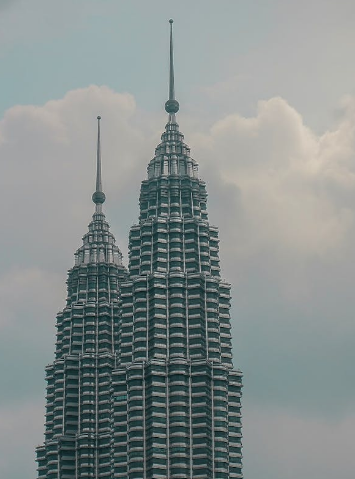
The towers' facade is a sophisticated composition of stainless steel and glass that creates a shimmering, crystalline appearance. The facade system consists of 33,000 stainless steel panels, each precisely fabricated and installed to create a seamless, reflective surface. The glass elements, totaling 55,000 square meters, are carefully integrated to maximize natural light while controlling solar heat gain.
The vertical expression of the towers is achieved through a carefully orchestrated rhythm of facade elements. Horizontal bands of stainless steel create subtle divisions that help break down the massive scale of the buildings, making them more human-scaled and visually approachable. These horizontal elements also serve functional purposes, providing maintenance access and housing mechanical systems.
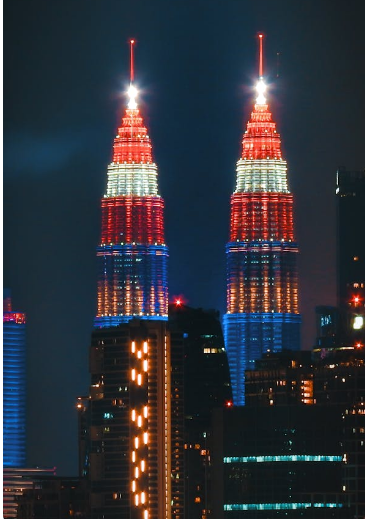
The facade's reflective quality means the towers' appearance changes dramatically throughout the day. In morning light, they appear warm and golden; at midday, they reflect the bright Malaysian sky; and in evening light, they take on a cool, silvery appearance. This dynamic quality makes the towers a constantly changing element in the cityscape.
Vertical Rhythm and Architectural Proportions
The towers' elevation emphasizes upward movement through a carefully designed system of stacked segments. Each segment represents a distinct architectural zone, from the base through the mid-section to the pinnacle. This vertical organization creates a coherent silhouette that is readable from great distances while providing visual interest at close range.
The base of the towers is designed to relate to human scale and street-level activity. As the towers rise, the architectural language becomes more refined and abstract, culminating in the elegant spires that reach toward the sky. The spires themselves are architectural elements, not merely structural necessities, and they contribute significantly to the towers' overall height and visual impact.
The consistent detailing throughout the height of the towers creates a sense of unity and coherence. Every element, from the smallest facade panel to the largest structural component, is part of a unified architectural vision. This attention to detail and consistency is what elevates the Kuala Lumpur Twin Towers from mere buildings to architectural masterpieces.
Interior Architecture and Spatial Organization
The interior architecture of the Kuala Lumpur Twin Towers reflects the same geometric principles as the exterior. The eight-pointed star floor plan creates varied and interesting interior spaces, with offices arranged around the perimeter to maximize views and natural light. The central core houses elevators, stairwells, and mechanical systems, efficiently organizing vertical circulation.
Lobby spaces are designed to create a sense of arrival and grandeur appropriate to such an iconic building. High ceilings, quality materials, and careful attention to detail create an environment that reflects the towers' status as a world-class office complex. The interior design maintains a connection to the Islamic geometric themes of the exterior while providing modern, functional office spaces.
Architectural Innovation and Technical Achievement
The Kuala Lumpur Twin Towers represent numerous architectural and technical innovations. The integration of Islamic geometry with contemporary high-rise construction required innovative solutions to structural, mechanical, and aesthetic challenges. The towers demonstrate that traditional design principles can be successfully adapted to create cutting-edge modern architecture.
The architectural success of the Kuala Lumpur Twin Towers lies not just in their impressive height or distinctive form, but in the thoughtful integration of cultural meaning, functional requirements, and aesthetic excellence. Every aspect of the design, from the overall form to the smallest detail, contributes to creating buildings that are both symbolically meaningful and functionally successful.
Cultural Significance and Architectural Legacy
The Kuala Lumpur Twin Towers have become an architectural icon, recognized worldwide as a symbol of modern Malaysia. They demonstrate that contemporary architecture can successfully incorporate cultural and religious symbolism while achieving international standards of design excellence. The towers have influenced subsequent architectural projects in Malaysia and throughout Southeast Asia, establishing a model for culturally responsive modern architecture.
Architect Cesar Pelli's achievement with the Kuala Lumpur Twin Towers represents a high point in his distinguished career. The towers showcase his ability to create architecture that is both locally meaningful and globally significant, demonstrating that the best architecture serves both functional and symbolic purposes while achieving aesthetic excellence.