Experiencing the Twin Towers: Comprehensive Viewing and Photography Resource
Explore the most effective methods to view and photograph the twin towers in Kuala Lumpur. Understand ideal viewing locations, photography approaches, observation spots, KLCC Park, and how to completely appreciate these celebrated structures from different vantage points throughout the city.
Viewing the Twin Towers: Diverse Perspectives and Viewing Experiences
The twin towers can be viewed from many locations throughout Kuala Lumpur, each presenting a distinct perspective on these celebrated structures. Comprehending the different viewing positions and what each provides can significantly improve your understanding of the towers' design and their function in the metropolitan area.
From street level in KLCC Park, you can experience the towers' enormous dimensions and value the connection between the structures and their surrounding environment. The park delivers outstanding positions for capturing the towers, with options to incorporate foreground components such as vegetation, water elements, and visitors to establish scale and context.
Medium-range viewing positions from nearby zones present chances to observe the towers alongside other structures and comprehend their function in the cityscape arrangement. These positions help demonstrate how the towers establish a visual order in Kuala Lumpur's urban setting and how they function as navigation markers.
Distant viewing positions, including from observation platforms in other tall structures or from elevated locations around the city, offer opportunities to view the towers as components of the wider metropolitan view. These positions help understand the towers' connection to the complete city and their influence on Kuala Lumpur's overall urban configuration.
Photography Tips: Capturing the Towers' Beauty
Photographing the Kuala Lumpur Twin Towers presents unique opportunities and challenges. The towers' reflective facade means their appearance changes dramatically with lighting conditions, offering different photographic possibilities throughout the day.
Early Morning Photography: Morning light provides warm, golden tones that can create beautiful images. The lower angle of the sun also creates interesting shadows and highlights on the towers' facades. Early morning is often less crowded, providing better opportunities for unobstructed views.
Midday Photography: The bright midday sun creates strong reflections on the stainless steel facade, making the towers appear bright and shimmering. This is an excellent time to capture the towers' reflective quality and their relationship to the bright Malaysian sky.
Evening and Sunset Photography: Evening light provides warm, dramatic lighting that can create stunning images. The towers often take on a golden or orange hue during sunset, creating beautiful contrast with the darkening sky. Evening is also an excellent time to photograph the towers with city lights beginning to appear.
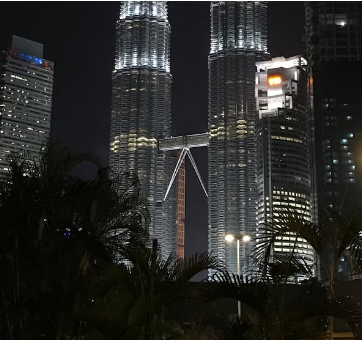
Night Photography: The towers are illuminated at night, creating a completely different appearance. Night photography allows for long exposures that can capture light trails, star effects, and the towers' nighttime illumination. The contrast between the lit towers and the dark sky can create dramatic images.
Composition Tips: Consider including foreground elements to provide scale and context. The KLCC Park offers trees, water features, and other elements that can enhance composition. Experiment with different angles and perspectives - the towers look different from various viewpoints, and exploring different positions can reveal new photographic opportunities.
KLCC Park: Ground-Level Observation
The KLCC Park, located directly adjacent to the Kuala Lumpur Twin Towers, provides the best ground-level observation experience. This carefully designed park offers multiple viewpoints and experiences, from intimate spaces near the towers to more distant viewpoints that show the towers in relation to the surrounding landscape.
The park's design includes water features, landscaping, and pathways that create interesting foregrounds for photography and observation. The integration of the park with the towers demonstrates how landscape architecture can enhance the experience of architectural landmarks.
Various areas within the park offer different perspectives. Areas closer to the towers provide opportunities to appreciate their scale and detail, while more distant areas allow for views that include more of the surrounding context. Exploring different areas of the park can reveal new ways of seeing and understanding the towers.
Surrounding Areas: Contextual Observation
The areas surrounding the Kuala Lumpur Twin Towers offer additional observation opportunities. The Suria KLCC shopping mall and other buildings in the KLCC development provide elevated viewpoints and different perspectives. These viewpoints help understand how the towers relate to their immediate urban context.
Observation from surrounding streets and public spaces provides opportunities to see the towers from different angles and understand how they appear from various parts of the city. These viewpoints help illustrate the towers' role as orientation landmarks and their visibility throughout the urban area.
The relationship between the towers and surrounding buildings creates interesting compositional opportunities for photography and observation. Understanding this relationship helps appreciate how the towers fit into the broader urban fabric and how they influence the character of the surrounding area.
Understanding Scale and Proportion
One of the challenges in observing and photographing very tall buildings is understanding and conveying their scale. The Kuala Lumpur Twin Towers are so large that it can be difficult to appreciate their true size without reference points.
Including people, vehicles, or other familiar objects in photographs helps provide scale and makes the towers' size more comprehensible. The KLCC Park and surrounding areas offer many opportunities to include such reference points in observations and photographs.
Observing the towers from different distances also helps understand their scale. Close-up views reveal details and help appreciate the towers' size, while distant views show their relationship to the city and help understand their impact on the skyline.
Weather and Lighting Conditions
Malaysia's tropical climate creates various weather and lighting conditions that significantly affect how the Kuala Lumpur Twin Towers appear. Understanding these conditions can help plan the best times for observation and photography.
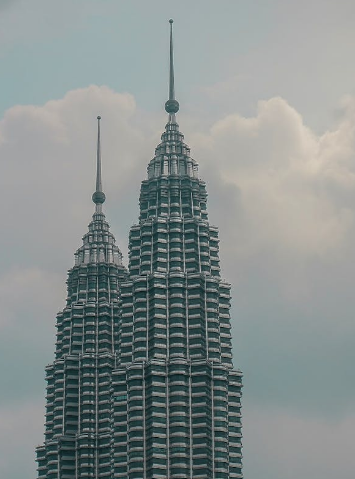
Clear, sunny days provide bright, high-contrast lighting that emphasizes the towers' reflective facade. Cloudy conditions create softer, more diffused lighting that can reveal different aspects of the towers' appearance. Rainy conditions, while less ideal for extended observation, can create interesting reflections and atmospheric effects.
The towers' appearance changes throughout the day as the sun moves across the sky. Observing the towers at different times reveals how lighting affects their appearance and how the reflective facade responds to changing light conditions.
Architectural Details and Close Observation
While the towers' overall form is impressive from a distance, close observation reveals the careful attention to detail in their design and construction. The facade system, with its precise panel alignment and careful detailing, demonstrates the quality of design and construction.
Observing the towers from the KLCC Park or other close viewpoints allows appreciation of architectural details that might not be visible from a distance. The geometric patterns of the eight-pointed star plan, the rhythm of the facade elements, and the integration of different materials all become more apparent with close observation.
The skybridge, visible from many viewpoints, is particularly interesting to observe closely. Its position, proportions, and relationship to the towers can be better understood through careful observation from various angles and distances.
Seasonal and Temporal Variations
The Kuala Lumpur Twin Towers' appearance varies not just with daily lighting conditions but also with seasonal changes and different times of year. While Malaysia's tropical climate means less dramatic seasonal variation than in temperate climates, there are still differences in lighting, weather patterns, and atmospheric conditions throughout the year.
Different times of day offer dramatically different experiences. Early morning provides quiet, peaceful observation opportunities with beautiful lighting. Midday offers bright, clear views that emphasize the towers' reflective quality. Evening provides dramatic lighting and the opportunity to see the towers transition from day to night illumination.
Important Notice: Information Only
This website provides informational content only. We do not sell tickets, provide reservations, offer booking services, or facilitate access to the Kuala Lumpur Twin Towers observation deck or other facilities. All information presented here is for general educational and informational purposes to help you understand and appreciate the towers' architecture and significance.
For official information about visiting the Kuala Lumpur Twin Towers, including observation deck access, tickets, and visiting hours, please contact the official Kuala Lumpur Twin Towers management or visit their official website. This website is an independent architectural information resource and is not affiliated with Petronas or any official organization.